The cheetah is the calmest of the big cats — and depending on how you draw the boundary, may not be a big cat at all. Different genus, purrs, can’t roar. What I find more interesting than the taxonomy is the field record: there is no documented case of a wild cheetah killing a human. None.
That’s stronger than it sounds. Leopards and lions kill people in three-digit annual counts. Tigers, historically, far more. Cheetahs — across all of Africa, all of the small Iranian holdout, decades of records — zero confirmed fatalities by an unprovoked wild animal. The captive record is not zero: a woman who broke into a Belgian zoo enclosure after hours in 2007, a three-year-old at a private interaction farm in South Africa in 2017. Both involved a stressed animal in an atypical setting. The underlying pattern holds. A non-distressed cheetah, given any option, leaves.
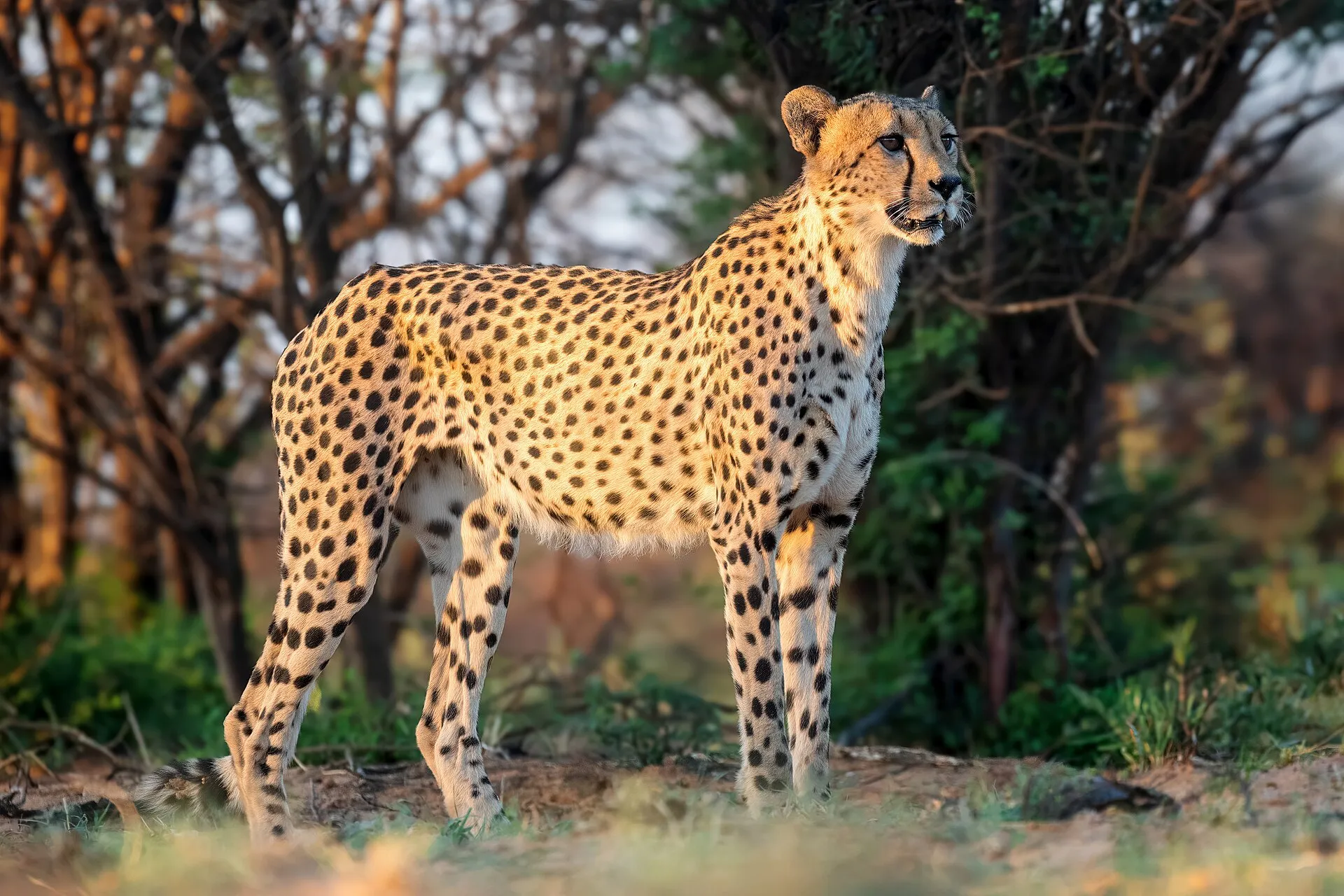 Photo: AfricanConservation, CC BY-SA 4.0 via Wikimedia Commons.
The cheetah’s evolutionary trade is speed at the cost of almost everything else — lightly built, only-partially-retractable claws, modest jaw strength, poor night vision by feline standards. It is a daylight ambush sprinter that uses its prey window once, fails roughly half the time, and then needs about half an hour to cool down before it can even defend its kill from a scavenger. Conflict is expensive for a cheetah in a way it is not for a lion. So they have selected, hard, against picking fights they don’t need to pick. We benefit from this asymmetry without earning it.
Captive cheetahs reveal the other side of the same trait: they are easily, almost catastrophically, stressed. In 1976, Laurie Marker — then running a cheetah breeding program at Wildlife Safari in Oregon, later the founder of the Cheetah Conservation Fund in Namibia — hand-reared an orphan cub named Khayam alongside a dog and noticed the cub stayed calm. By 1980 the San Diego Zoo had paired a Golden Retriever named Anna with a male cheetah called Arusha, and the practice was on its way to becoming standard. Today, anxious zoo cheetahs at San Diego, Columbus, Richmond, Turtle Back and a dozen others have companion dogs — typically Golden Retrievers, Labradors, or Anatolian Shepherds, chosen for being calm and physically resilient enough to absorb cheetah play without escalating. The dog is a regulator. The cheetah watches a confident animal stay un-bothered, and learns it can too.
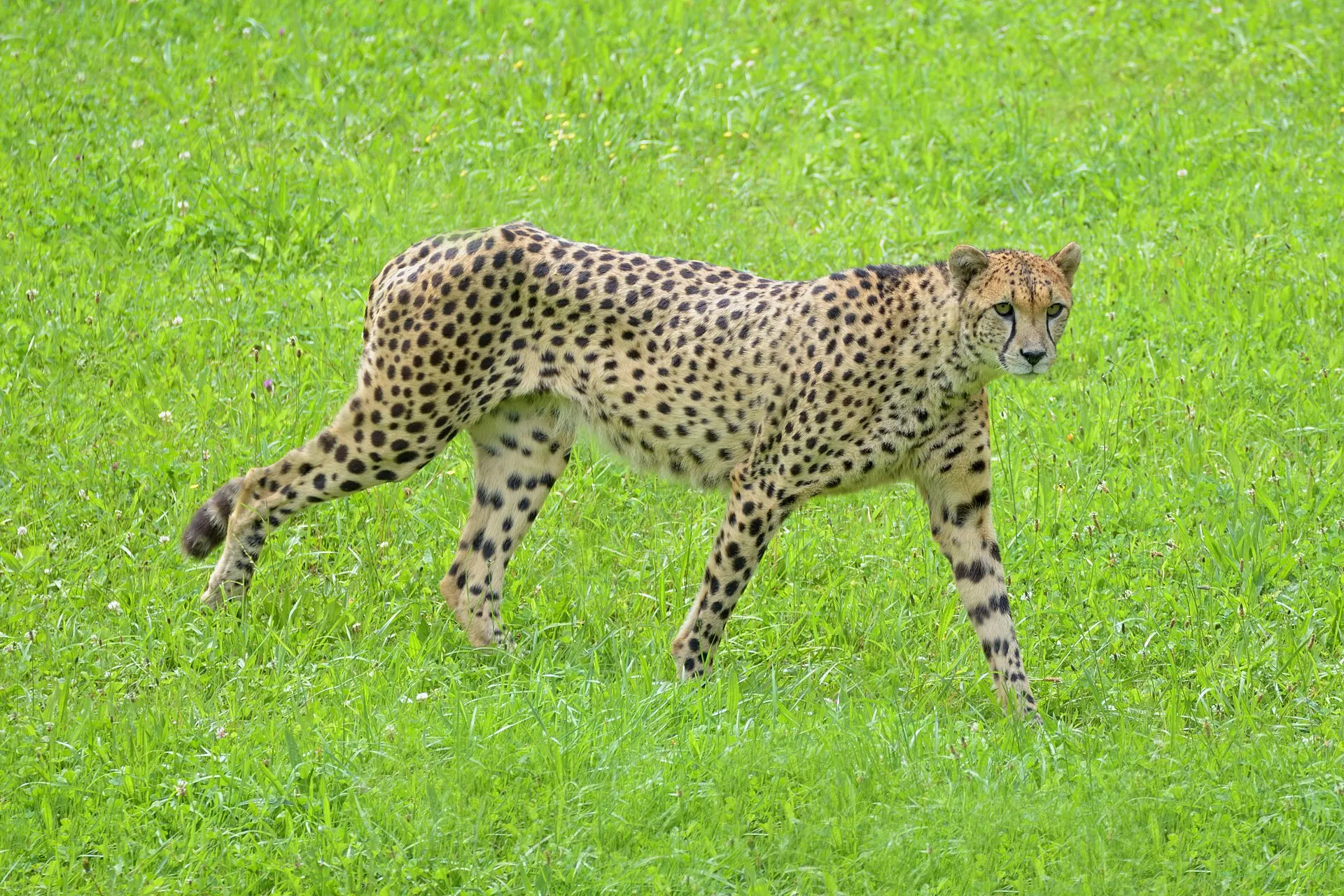 Photo: Joselodos, CC0 (public domain) via Wikimedia Commons.
The visitor’s responsibility, on the wild side, is mostly to not make this trait the cheetah’s problem. Cheetahs in the Maasai Mara routinely use safari vehicles as shade and as elevated lookout points; a few have started hunting from them. That is charming and bad — it shifts their predation pattern, distorts mating opportunities (the same few habituated females end up photographed by every operator on the reserve), and concentrates them in the worst possible place if a vehicle ever needs to drive away in a hurry. Good operators stay quiet, keep distance, refuse the staged shot. The framing worth keeping is that the cheetah’s calm around us is a gift of its biology, not an invitation.
In the same direction: sanctuary versus interaction park is the line worth knowing. The Cheetah Conservation Fund in Namibia, the Ann van Dyk Cheetah Centre in South Africa, and a handful of others run rehabilitation, anti-poaching livestock-guardian dog breeding, and research without ever putting a visitor’s hands on an animal. The places that let you pet a cub for fifty dollars are not those places. The two captive fatalities above come from the second category; the first category has none.